Showing posts with label USA. Show all posts

Saturday, 28 December 2019

362: Most Things Haven’t Worked Out, by Junior Kimbrough

Junior Kimbrough (USA)
Most Things Haven’t Worked Out (1997)
8 tracks, 49 minutes
Bandcamp ∙ Spotify ∙ iTunes

I first heard of Junior Kimbrough through the Fat Possum Records’ sampler I wrote about in September, Not the Same Old Blues Crap. It actually turns out that the highlight of that compilation is also the highlight of the album it came from: Most Things Haven’t Worked Out by Junior Kimbrough.

It’s the very first track, ‘Lonesome Road’. The thing that immediately strikes me is that this track is modern American blues at its most African. It’s just Kimbrough and his electric guitar playing a lanky, plodding drone blues. It has a feeling of Lightnin’ Hopkins slowed way down, or Ali Farka Touré if he’d taken an extended stay in the Mississippi Delta. That drone feels so irresistible that I’m sure it could go on for hours, Kimbrough’s fingers picking out understated licks from the deepest wells of the blues all the while. His vocals offer an appropriately mournful cry that bends down to the notes that give the most emotional resonance, even if those notes would be considered horrendously flat by any classical music scholar. The way he moves his voice is with a melisma that could have come direct from the Sahara desert, echoing the muezzin’s call and uniting the dusty roads of Mississippi and Mali. It’s a real shiver-down-the-spine piece, and opening the album with it is Kimbrough’s way of setting the scene. This is what the neighbourhood looks like. With the rest of the album, he beckons you into his jukejoint.

Really. The album was recorded in Kimbrough’s own venue, and after the first track, the mood picks up. His guitar playing and moaning vocals retain their earthy hues that trace a path half-way across the Atlantic to the blues’ first home, but he is joined by drums, bass and lead guitar that push things in a rockier direction. It doesn’t lose its way: this is rock in the direct lineage of the old Mississippi jukejoint players anyway, sometimes literally – the drummer is his own son Kenny Malone, and the bass player is Gary Burnside, son of R.L. The result is a meeting across generations that reaches back even further, with simple punkish blues rock finding a comfortable place to play alongside tones that stretch back to the oldest ancestors, to the enjoyment of all.

Although he’d been playing the blues since he was a child and had recorded his music starting in the 1960s, it wasn’t until the 90s, and the last years of his life, that Junior Kimbrough began to get the level of attention he deserved. By the end he could count Iggy Pop and Keith Richards among his friends, and in the years since he passed (just a year after this record came out), at least two tribute albums have been released of Kimbrough’s songs, one by rock duo the Black Keys whose sound is deeply indebted to the great man. Kimbrough’s music isn’t quite like anyone else’s, in the Mississippi Delta or elsewhere, and to listen to it is to hear links back and forward through the whole of the history of the blues – and it’s all summed up in that one unfaltering drone.

Friday, 27 December 2019

361: Readings by Jack Kerouac on the Beat Generation, by Jack Kerouac

Jack Kerouac (USA)
Readings by Jack Kerouac on the Beat Generation (1960)
9 tracks, 55 minutes (1990 CD version)
Spotify

Jazz music is brilliant, a boundlessly creative form that exists to push the boundaries of what’s possible, its musicians exploring the outer wilds of rhythm and harmony and creating some of the catchiest and most exciting melodies to go around them, even off the top of their heads.

Jazz isn’t just music, though. Jazz is a whole world of art and attitude. Painting, architecture, graphic design, photography, dance, pornography, journalism and fashion can all be jazz. It can also be the way you receive things, you can hear something with a jazz ear or see it with a jazz eye or behold it with a jazz brain. Conversation can be jazz. I’m not really sure how, but I’m pretty sure there can be jazz in food, too – if anyone knows any hip chefs who can help me confirm, that would be very useful. There is a whole world of jazz that is solidly in the realm of not-music. We’ve heard non-musical jazz on this blog before, and much like the monologues of Lord Buckley or the comedy of How to Speak Hip, Jack Kerouac’s writing is jazz.

Kerouac thought in jazz. The way he describes scenes in his novels are so lush and full of passion – whether that is a positive or negative passion – and when he describes actions it is as if they have been filtered through centuries of poetry. My favourite part of his writing, though, is when he gets on a riff. Kerouac’s riffs can be on anything, from the aforementioned scene-setting to thoughts on philosophy or culture or the taste of food. You can feel the text building up a pace as his thoughts tumble over each other. It’s almost stream-of-consciousness, but in a way that has been keenly honed. Thought threads come and go but never seem random, rhythms are developed and dissipate and the rules of grammar are bent and broken in a way that only serves to increase the beauty of the riff without losing any of its intelligibility. That’s right: Kerouac wrote in jazz solo.

The most potent example of this for me comes on this album of Kerouac performing his work – poetry and excerpts of his novels – completely solo. ‘The Beginning of Bop’ (later retitled ‘Fantasy: The Early History of Bop’) was originally an essay written for a gentleman’s magazine in 1959, but becomes another beast when he performs it out loud. It’s an 11-minute flight into the formative moments of bebop that never quite existed. It’s a stunning listen, and incredibly hypnotic. Kerouac bends his words into an almighty groove, his smooth, smoky voice and heavy Massachusetts accent giving the written words a rhythm so palpable you could play drums to it. The story he spins is compelling, too, musing on the meanings and deeper religious, philosophical and nostalgic bases of the music as well as its sounds and cultural impacts. I first listened to this recording sitting in a beautiful, empty church, followed that evening by a small but feverish obsession whereby I transcribed the whole of that recording as I heard it, pen-on-paper across five A4 sheets. I felt desperate to imbibe the words into myself, and I’m still glad I did that. It’s as if I solidified my own experience and connection to this amazing work.

Jack Kerouac is probably the most well-known of the movement known as the Beat Generation – he came up with the term himself, after all – and his semi-autobiographical book On The Road is regarded as one of the Great American Novels. It’s even more impressive when you consider that English wasn’t even his first language. For me, Kerouac is also one of the most defining voices in the non-musical world of jazz. His words can sing you to another place – listen to this album and let him read you there.

Thursday, 26 December 2019

360: Nu Yorica! Culture Clash in New York City, by Various Artists

Various Artists (Puerto Rico/USA)
Nu Yorica! Culture Clash in New York City (1996)
16 tracks, 109 minutes (2 CDs)
Spotify ∙ iTunes (Weirdly, the digital edition has a different tracklisting than the CD, so both versions contain some unique tracks. But they’re close enough for the purposes of this blog, at least.)

This is one of those compilations that paints such a vivid picture of a specific time and place that it just makes you want to jump into that world, smell its smells, meet its characters, behold their fashions and listen to as much music as you possibly can. And it does it all with 16 impeccably chosen tracks.

The album presents the music of the Latin Caribbean played in a way that could only have come together in a city such as New York, and only in the 1970s. It’s the result of Latinx people from all over the Americas living together, sharing their differences and revelling in their similarities, all the while making music inspired by every sound bouncing around the city at that time. Each track is grounded in Latin styles, whether that’s son, rumba, charanga, bachata, guarancha, the old Afro-Latin rhythms, or, more often than not, a combination of many together, and that is then taken off into flights of everything that was around at the time. There is lots and lots of funk and jazz in there, a few really strong disco elements and even some classical music in Eddie Palmieri’s piano playing on ‘Un Dia Bonita’.

And all of it has a complete lack of that cheesiness that I find inherent in so many Latin styles. The musicians here filter out all of that over-the-top dramatics with a sincerity that leaves only mean skill and pure energy – and without taking themselves too seriously to have fun, either. The outcome of this equation is just liquid coolness.

What a wonderful collection. When I’m listening to this album, there’s really nowhere else I’d rather be than in the late-night clubs of Nu Yorica with a whole load of dancing ahead of me. And if you turn up the music loud enough, close your eyes and let your body move its way, maybe that world doesn’t have to feel quite so far away.

Tuesday, 24 December 2019

358: The White Stripes, by The White Stripes

The White Stripes (USA)
The White Stripes (1999)
17 tracks, 44 minutes
Spotify ∙ iTunes

When I first became aware of the White Stripes – probably when I was a young teenager – I didn’t really pay any attention. I knew their biggest hit ‘Seven Nation Army’, but other than that I just thought they were another guitar-based rock group – a format that has never overly excited me in and of itself. There was the slightly interesting fact that they were a duo, but meh.

Then somehow I fell into an internet research hole and ended up finding the tracklist to the band’s debut album…and found out that it contained a cover of St James Infirmary (my favourite song at the time), as well as tracks by Robert Johnson and Bob Dylan and an extended quote from ‘John the Revelator’. Were the White Stripes a blues band and no-one told me?!

I found someone in school who could burn me off an incredibly low-quality copy of the CD (no streaming in those days kids!) and…yeah! It was blues all the way. Heavy, punk blues, but still definitely blues. While a bit of me was annoyed that I hadn’t given them a chance in the first place, but I was stoked to be able to ‘get’ what everyone else got a long time before me.

The group’s first album is made in the time-honoured punk tradition of having a million songs on one album, with only a handful of tracks breaching the three-minute mark. It means that the ideas come thick and fast; it’s musically hyperactive but the intensity of it all sweeps you up like a whirlwind – it never feels as if the album’s frenetic pace is outstripping the White Stripes’ abilities to create great things. Jack White’s vocals and guitars are simply superb, crazy wild, introspective, simple and brash, it’s got everything while all being indisputably bluesy.

And that’s a quick thing: it’s become basically a standard music joke that Meg White can’t drum, but I think that’s clearly bollocks, probably misogyny-fuelled bollocks at that. Her drumming as part of the White Stripes, and especially on this debut album, is very simply played, yes, but only because it needs to be. If the album was full of flashy or deeply intricate drumwork, it would have sounded out-of-place, not to mention that it would have completely overshadowed the whole meaning of the sound the two were creating. And what she does play – simple or otherwise – is perfectly in-keeping with that sound, and she executes it exactly right. Besides, Jack White also plays as simply as each song needs, and he’s the one hailed as a genius. Weird that.

It’s one of the reasons it all works so well. The fact they’re a duo is actually incredible. Aside from one or two overdubs on the whole album, it’s obvious to the ear that only two people are creating the music, but the sheer noise of it, and the emotional force with which it hits makes it resonate as if it were a band of many more.

So yes, I ended up loving the White Stripes, especially their first couple of albums. The bluesiness of their music became less obvious after that, although it was obviously never far away from Jack White’s antique record player, as evidenced by his subsequent musical adventures proved. The moral of the story is: teenagers can be hella snooty, never trust their opinions. Or maybe, trust every teenager’s opinions except mine, because the White Stripes are great.

Sunday, 22 December 2019

356: Winter in America, by Gil Scott-Heron & Brian Jackson

Gil Scott-Heron & Brian Jackson (USA)
Winter in America (1974)
9 tracks, 45 minutes
YouTube ∙ iTunes

After covering Gil Scott-Heron’s debut studio album Pieces of a Man in August, I knew I couldn’t leave it at that. It was difficult to choose between this one and his 1981 album Reflections – the latter includes the brilliant tracks ‘Is That Jazz?’, ‘“B” Movie’, ‘Gun’ and the cover of Bill Withers’ ‘Grandma’s Hands’. I went with Winter in America in the end because it’s a great example of the collaboration between Scott-Heron and flautist/pianist Brian Jackson. Although the music is still the funk and soul that fits Scott-Heron’s voice so well, Jackson also brings a big jazz influence – you can hear Miles heavy in Jackson’s arrangements, as well as Coltrane and other Afrocentric jazz players, which accurately reflects similar themes in Scott-Heron’s poetry on this album. The music on Winter in America is perfectly attuned to the poetry and lyricism being laid down; it’s great in its own right but is never overstated, instead allowing the words to take centre stage. When dealing with such a genius wordsmith as Gil Scott-Heron, that is exactly the correct approach.

I feel incredibly lucky to have been able to see Scott-Heron live, headlining the WOMAD festival in 2010, less than a year before he died. He was obviously ill at the time, but his performance was out of this world. His voice was croaky and weak (as can be heard on his last album We’re New Here) but his words and his energy were as strong as ever. If my memory serves me correctly – and the more I think about it, the less I’m sure, but it’s the memory I have and I hold it dear anyway – the highlight of the night was a medley of ‘The Bottle’ and ‘The Other Side’ that he played pretty much solo on vocals and keys. It was a sight to behold. The words were so dear and personal and passionate, full of grief and pain and regret and sung as if it was being dredged up from the very depths of his soul. It was stunning and left us all gaping in awe. Hearing ‘The Bottle’ in the context of this album is maybe not as harrowing as that performance but it’s still a masterpiece of insight, addressing the problems of alcoholism and drug addiction both within his own life and from the outside as a member of the community bearing the brunt of the effects. It’s a song that requires a huge amount of introspection that is handled with dignity and clarity without losing any of its raw emotional power.

Winter in America also shows a slightly softer side to Scott-Heron than some of his other albums, with a few really sweet songs such as ‘A Very Precious Time’, ‘Song for Bobby Smith’ and ‘Your Daddy Loves You’ showing his sentimental side, especially clear when his soulful voice is backed only by a jazzy electric piano. My favourite track off the album, though, is ‘H²Ogate Blues’. It’s an extended spoken word poem complete with a sparse but groovy blues accompaniment and a vocal audience of the band themselves. Although Scott-Heron speaks his part, it syncs up so perfectly with the blues changes in a really satisfying way, somehow even when he falters and goes back to the beginning of a line. It also does a really good job of making a bitter political subject funny without losing any of its impact. It’s about the biggest scandal of the day (“If H²O is still water and G-A-T-E is still gate, what we’re getting ready to deal on is the Watergate Blues”), but it’s still quite depressing how much the themes cut across 45 years and an Atlantic Ocean, even if some of the more specific references are lost on those of us who weren’t around at the time.

Gil Scott-Heron had many personal flaws, but as an artist he was flawless. Every word he spoke or sang was the best possible one for the situation, articulating each of his thoughts in the most impactful and entertaining ways. If history is just, he will be remembered not just as a wonderful poet and singer, but as one of the greatest thinkers of his generation. Much like a West African griot, the things he said are a history in and of themselves, telling the story of the lives and politics of Black people in the US all through his lifetime. His works are treasures and need to be regarded as such – especially seeing as how relevant they still are today.

Wednesday, 18 December 2019

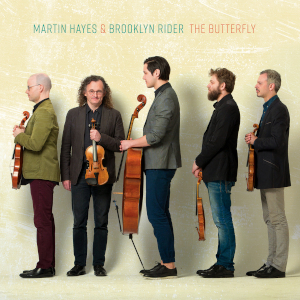
352: The Butterfly, by Martin Hayes & Brooklyn Rider

Martin Hayes & Brooklyn Rider (Ireland/USA)
The Butterfly (2019)
12 tracks, 45 minutes
Bandcamp ∙ Spotify ∙ iTunes

I usually think of Irish folk music as usually falling within one of two broad categories: perky, fast and often boisterous tunes made for dancing; and long and fairly slow songs of lament. Fiddler Martin Hayes has long been a proponent of a third way: he plays his tunes slowly, giving a repertoire originally meant for dance a different meaning. Under his bow, the melodies have longer to lie on the air before reaching the ear, and this lends a sort of maturity to their sound; this can mean that they can perhaps have a slightly melancholy tone, or a more thoughtful one, or maybe one that conveys a wise and knowing smile.

With this album, released earlier this year, Hayes’ signature style is given a perfect setting from the unlikely source of Brooklyn Rider. They’re a string quartet from New York that work somewhat in the Kronos Quartet mould, performing contemporary and avant-garde classical music and frequently collaborating with artists of different genres from all over the world, including Iranian kamancheh player Kayhan Kalhor and roots banjo player Béla Fleck.

Here, the collaborators do what they do, and the marriage is beautiful. Hayes plays his fiddle in his calm and considered way, and Brooklyn Rider’s refined but explorative arrangements putting the Irish melodies into a context that allow them to breathe. The quartet play lively when needed, weaving Hayes’ lines with countermelodies, harmonies and even miniature rounds as appropriate, but they can also sometimes act as a breeze, playing long, floating notes that quaver and flutter occasionally, but allow the fiddle melodies to echo out into the distance, as if they’re being played to a hill, a cloud, a spring or the sea.

It’s always a risky business to bring classical music into a type of music that…well, basically, isn’t classical music. The western classical form has led to the creation of wondrous works for many centuries, but it also brings with it many rules and conventions that are often strictly applied. When classical music is used in fusions, it must be very carefully applied, in case these restrict the characteristics of the other styles or the musical freedom of any collaborators involved. The Butterfly represents the optimum classical collaboration – neither party steps on the other’s toes, while both craft their own sounds to bend in the direction of the other, enough to work in harmony but keep their own sound strong at the same time.

The Butterfly is a lovely record that shows relatively little-heard side to Irish folk music while taking it to a different sphere – and introducing the folk aspect into the classical sphere as well. An unexpected delight for me, and one of my albums of the year.

Thursday, 12 December 2019

346: Bags & Trane, by Milt Jackson & John Coltrane

Milt Jackson & John Coltrane (USA)
Bags & Trane (1961)
8 tracks, 56 minutes (1988 CD version)
Spotify ∙ iTunes

When you read the hard info about this album, the auspices are good. It’s a double-header from vibes player Milt ‘Bags’ Jackson and saxophonist John Coltrane, whose statuses as the all-time greats of their instruments can hardly be in question; the rhythm section is an impeccable trio of Paul Chambers on bass, Hank Jones on piano and Connie Kay on drums; it was even recorded in that magical year of 1959, although it didn’t see light for another couple of years. Stats like that would lead to some pretty high expectations. And you know what? It lives up to every one of them.

How much more can you say about Bags & Trane than that it’s…Bags, and Trane? It was the only time the two masters met in the studio, and of course it’s fantastic. It was before Coltrane’s big musical/spiritual/cerebral revolution that tore the fabric of jazz and opened up a portal to another universe forever, but still when he was at the top of his game as a hard-bop player, and Bags subtle playing is nevertheless slightly less restrained than when he’s in full-on third stream mode. Both musicians pull the other into their own sphere a little bit, to the detriment of neither and the benefit of the album as a whole. Neither do they suffer from the clash of egos that is a common side-effect of such meetings: both players are as gracious as they are virtuosic, clearly revelling in each other’s skills and allowing room for the magic to take place in its own time.

The two tracks that allow each musician to shine so much are the succinctly named pair of ‘Bags & Trane’ and ‘Bebop’. They both have very different feels. The first is a cool, slinking blues at 120 beats per minute; the second a heavy bop, originally by Dizzie Gillespie, at a stonking 150 beats per minute, but with most of the playing itself in double time. In both settings, each musician’s solos (including turns from Jones and Chambers) could only be their own, unmistakably, but they hit the groove of each track exactly right, even down to their positioning in the solo order. Perhaps most importantly, neither overshadows the other.

It says two things to me. It’s mad that Bags and Coltrane only recorded with each other just this once, as their chemistry feels as if they’ve known and explored each other’s playing from a hands-on basis for years. And then that it just shows what immaculate geniuses the two were; to be able to slip so comfortably into such a close collaboration as if it were no thing, as a mere diversion from their own respective musical journeys, and then to go on just as easily in their separate directions is surely a sign of what other level they were on, able to connect with each other on some telepathic level through the medium of jazz. We’re so lucky that they did decide to come together this one time, to create this record that still makes me as excited to listen to it as I’m sure the jazz fans of 60 years ago were when they first heard this meeting of masters.

Monday, 2 December 2019

336: Abraxas, by Santana

Santana (Mexico/USA)
Abraxas (1970)
9 tracks, 38 minutes
Spotify ∙ iTunes

I’ve talked before about the incredible fertility of rock music in the short period of the late-60s and early-70s, but I think Abraxas by Santana is a perfect example of this.

Abraxas is a classic rock album. It was huge at the time of release, and has been regarded as an important work ever since, frequently included in lists of best rock albums ever. But it’s so much more than ‘classic rock’ and all the images and associations that term conjures. That element is definitely there, yes, and seedlings of what would be ‘heavy rock’ can be heard occasionally throughout, but it’s far from the most noticeable aspect of the album. In fact, a defining feature of Abraxas is that it’s difficult to even fit it easily into the category of ‘rock’ at all.

It begins with ‘Singing Winds, Crying Beasts’, a moody and atmospheric instrumental piece with mysterious jazzy chords, a Latin rhythm and only a few glimpses of Carlos Santana’s wailing guitar among the waves of vibrating cymbals. That opening piece lasts for nearly five minutes and it’s a proper statement for what’s to come: whatever it will be, it’s not going to be what you’d expect. That piece segues into a cool version of Fleetwood Mac’s blues ‘Black Magic Woman’ and then into the Eastern European-influenced ‘Gypsy Queen’…and then it’s straight into a rocked-up but faithful version of Tito Puente’s cha-cha ‘Oye Como Va’. The next one, ‘Incident of Neshabur’ is a driving jazz-rock that sounds even Bitches Brew-like at times. And all that in just the first side! What a rollercoaster. The rest of the album also features the smooth jazz of ‘Samba Pa Ti’, the heavy metal premonition of ‘Hope You’re Feeling Better’ and ends up with the percussion-and-voice rumba of ‘El Nicoya’.

Holding it all together is, it almost goes without saying, a core of amazing musicians. The group themselves are so tight together that they can switch things up so often and know that everyone else on the band is going to be on the same page. Gregg Rolie’s keys are solid all the way through and his turns on the Hammond organ and electric piano really kick up the funk; the Latin percussion from José ‘Chepito’ Areas, Michael Carabello and Rico Reyes ground the whole album in a rhythmic basis that hadn’t – and still hasn’t, really – been explored in a rock realm but that fits it so well; and, of course, Carlos Santana’s lead guitar work that flits through the album’s many genres with ease, and really lets him stretch his muscles as an exciting and forward-thinking soloist.

You never know where you stand with Abraxas. Every track is different in its own way, but it all fits together in terms of the energy and atmosphere created and curated throughout the whole listening experience. That’s so rare; it’s an album that has the ability to surprise at every turn without making the whole endeavour feel like an exercise in wilful quirkiness. ‘Rock’ may be the wrong word and ‘Latin-blues-rock-prog-jazz’ is just stupid…but ‘classic’ is definitely the right word.

Sunday, 1 December 2019

335: Harpin’ on a Riff: The Best of Charlie Musselwhite, by Charlie Musselwhite

Charlie Musselwhite (USA)
Harpin’ on a Riff: The Best of Charlie Musselwhite (1999)
20 tracks, 78 minutes
Spotify playlist

Being well into blues music during my teens, I naturally listened to a lot of harmonica players, whether they were solo performers or sidemen. Little Walter, James Cotton, Sonny Terry, Junior Wells, the Sonny Boys Williamson…but it was Charlie Musselwhite that really captured my imagination and led me to pick up the harmonica for myself. Specifically, it was this album, a cheap’n’cheerful compilation that shows off some of his wildest cuts from the 1970s to the 1990s.

In presenting such a wide time-frame of Musselwhite’s music, it also shows how wide his output has been too. There are the straight-ahead blues pieces (‘Finger Lickin’ Good’, ‘Hear Me Talkin’’, ‘Taylor’s, Arkansas’, the acoustic ‘Fast Life Blues’), swaggering balls-out blues-rocks (‘It’s Getting Warm in Here’, ‘Crazy for My Baby’, ‘Harpin’ on a Riff’) and laid-back, cheesily jazzy soul (‘Revelation’, ‘Yesterdays’); there are even hints at his interest in Latin music with the track ‘Azul Para Amparo’, which he eventually explored further with a collaboration with Buena Vista Social Club’s tres player Eliades Ochoa.

While it is interesting to hear the directions that Musselwhite takes the harmonica and how he adapts his playing to the different scenarios, I actually do prefer it when he’s sticking with the most on-message blues styles. It’s in these that he gets to stretch his legs and really show off the acrobatics that he’s capable of. His playing feels so much more natural and free on those tracks – ‘Finger Lickin’ Good’ is a great example because it’s just a simple repeating 12-bar groove that he spends four minutes improvising over and holds the ear rapt with the playfulness and lyricism of his phrases.

This compilation may not be as cohesive as his albums proper – especially the two that he released on Real World Records, Sanctuary (2004) and Delta Hardware (2006), which I love – and maybe that’s why I feel that some of the pieces here are a little weak in comparison to others. Nevertheless, I include this album primarily because it shows just how well Musselwhite has expanded the range of the harmonica into previously inaccessible territories while always remaining a figurehead for the blues style of which he is a master. And, y’know, for helping me to develop a handy, pocket-sized skill that I can annoy people at parties with, too.


Tenuously-related footnote

I mention this here because I wouldn’t have an appropriate place to do so otherwise. I basically just wanted an excuse to post this video and rave about it. It’s a clip from the film Blues Brothers 2000. As a whole, that is one dire piece of cinema from start to finish, a rubbish sequel to a classic film that didn’t seem to understand where any of the original’s charm came from and instead ramping everything up to stupidly bombastic degrees that flop harder than a beer-bellied Brexiter when presented with a swimming pool at a Spanish all-inclusive resort. All except for this one five-minute scene, where that bombast comes up trumps. The set-up is that the Blues Brothers Band is taking part in a battle of the bands, and their unknown competitors, the Louisiana Gator Boys, go first. This is what happens:


The first time I watched that, my jaw was on the floor. In fact, every time I watch that, my reaction is exactly the same. That is quite probably the best blues supergroup ever to have existed. Every few bars, the camera cuts to another blues legend doing their bit. So much so that every time I watch it, I’m amazed that I forgot that so-and-so was in it. I mean, just check that line-up: B.B. King, Eric Clapton, Bo Diddley, Charlie Musselwhite (see, there was a connection!), Koko Taylor, Jack DeJohnette, Stevie Winwood, Billy Preston. Dr John popping in right at the end! Jimmy Vaughan and Jeff ‘Skunk’ Baxter just chilling out in the groove; Isaac Hayes as a backing vocalist! The face-melting four-way horn solo by Grover Washington Jr, Clarence Clemons, Joshua Redmond and Jon Faddis, which ends in them all improvising wildly over the top of each other in a noise from heaven itself. My word. That audience is real, by the way. A few hundred people actually got to witness that crazy performance live. If I were there, I don’t think I’d ever be able to talk about anything else.

And that’s literally it, that’s all I wanted to show you. Bloody good though innit? Now you don’t have to see the rest of the film, you’re welcome.

Saturday, 30 November 2019

334: Cool Spring, by David Rothenberg, Bernhard Wöstheinrich and Jay Nicholas

David Rothenberg, Bernhard Wöstheinrich and Jay Nicholas (USA/Germany)
Cool Spring (2016)
5 tracks, 51 minutes
Bandcamp ∙ Spotify ∙ iTunes

David Rothenberg’s music challenges the accepted – or, rather, assumed – definitions of what music is or can be. In fact, he goes further and adds questions about who or what musicians are or can be. Big themes, then. You can see why Rothenberg is not just an accomplished musician but a professor of philosophy at New Jersey Institute of Technology.

Using his clarinets, a sharp mind for jazz and improvisatory music and, most importantly, an attentive and unfaltering ear, Rothenberg has plumbed new depths in research into non-human music. Over the past 15 years, he has released books, films, articles and albums about the music inherent in the lives of insects, marine mammals and birds, including creating majesterial, uncanny and ultimately ephemeral collaborations between himself and the animals, performing together on equal footings. I have been lucky enough to witness several performances by Rothenberg; by far the most memorable have been several occasions, from late night to early morning, where he created stunning improvised music with nightingales in the parks of Berlin, some of which have been captured in the recent album Nightingale Cities and film Nightingales in Berlin.

That was somewhat of a diversion. In Cool Spring, Rothenberg’s collaborators are a pair of sapient hominids like himself, electronicist Bernhard Wöstheinrich and bassist Jay Nicholas. The music is deep and intense while still managing to be relaxing in its own way; it’s chill-out that relieves parts of your mind and fully engages others. It does this as a combination of ambience, free jazz, broken downtempo beats, avant-garde, environmental sounds, spacey electronica and even hints at styles as varied as dubstep, folksong, classical. It’s surely art music in every sense of the term.

But even though this album is inescapably humanly organised sound, Rothenberg’s adventures into the sonics and songs of the animal kingdom are all over it. The most direct evidence is in some of Wöstheinrich’s samples of birds and insects, but the way Rothenberg approaches the clarinet, in his phrasing and his melodiousness, the way his lines flit and flirt with each other, obeying their own rhythmic rules but never clashing with the rest of the created aural environment. The whole flow of the pieces on this album, the shapes they trace and the stories their developments tell, is impacted by the natural world around us.

In all of his work, with humans or other animals, David Rothenberg creates in harmony with the sounds of our living planet, rather than operating above it, and is always compelling while he does it, be it in the medium of music, film or words.

Tuesday, 26 November 2019

330: The Spotlight Kid, by Captain Beefheart

Captain Beefheart (USA)
The Spotlight Kid (1972)
10 tracks, 36 minutes
Spotify ∙ iTunes

We’ve skipped ahead a bit since the last time we met Captain Beefheart. Then, we listened to Strictly Personal from 1968; although Spotlight Kid came out less than four years later, much had happened. Specifically, three more albums including the eternal masterpiece of Trout Mask Replica, an album that was so ahead of its time that we’re still trying to catch up to it*, and Lick My Decals Off, Baby, a more refined album but with a darker edge. So when The Spotlight Kid came around, I’m not surprised that it was met with confusion. Even those that performed on the album are quoted as being disgusted by its ‘boring’ and ‘simple’ content.

It makes sense. This isn’t the manic but tightly-reined chaos of Trout Mask Replica, and I’d even say it’s less starkly intelligent than Lick My Decals Off, Baby. But this is no bad album by any stretch: for me, this one is all about the feel. And that feel is boogie. Right from the beginning, too, with the track ‘I’m Gonna Booglarize You Baby’ – no mistaking the intent there, as a lexical or musical statement. It starts with choppy, funky and effected guitar riffs layered on top of each other before the deep, rumbling growl of the Captain comes gurgling from some primordial depths with his barely logical lyrics, only occasionally reaching up into the octave to offer a pained blues moan, while the evermoving boogie carries on underneath it all.

It carries on like that. It is much more simple than the previous few years’ material, it’s a little straighter on the rhythms here, a little more predictable in the melody there, but nothing about it can leave you in any doubt that this is the one and only Captain. It’s stamped in every sound and every word; it just shows that accessible Beefheart is still as innovative and still as…well, Beefheart.

Near the end of the album there is a basically perfect run of three tracks that keep the boogie rolling all the way through. It starts with the train song ‘Click Clack’, where the introduction doesn’t give you a clue as to where the beat is actually going to go when it finally comes in; then ‘Grow Fins’, another intensely blues-riddled tale, one of exploring the depths to get away from the banalities of solid ground, shored up by some fantastic slide guitar and blues harp interplay; and finishing up with – who’da thunk it? – a Captain Beefheart Christmas song, ‘There Ain’t No Santa Claus on the Evenin’ Stage’, replete with jingle bells and with a typically perverse spin on things, sung right at the bottom of Beefheart’s vocal register. Listen to those three and you’ll know you’ve been booglarized.

In some ways, ‘Grow Fins’ sums up Beefheart for me. Not that it is his most representative track or anything, but that the blues harp that he blows on that one is just so, so good. The Captain’s skills at the harmonica are such that if he wasn’t known for his thoroughly considered batshit compositions and poetry, if his career had taken the slightest kink along the way, I have no doubt that he would still have been known as one of the greatest blues harpists ever. And when you consider that even disregarding his music, he’s known as a legitimate fine artist and that, by all accounts, if he’d have gotten his way as a teenager, probably would have gone on to be a great sculptor instead, it becomes obvious that Captain Beefheart was an artist to the core, and would shine from the pack no matter what media he chose, be it paint or marble or words or blues harp. All that mattered was that it was him. And whatever you think about his work, you can’t deny that, if nothing else, it was him.


* To shamelessly steal words from How to Speak Hip, Captain Beefheart was such an out genius that the thing he was a genius at hadn’t been invented yet.

Thursday, 21 November 2019

325: Resiliencia, by Taína Asili

Taína Asili (Puerto Rico/USA)
Resiliencia (2019)
12 tracks, 54 minutes
Spotify ∙ Spotify ∙ iTunes

The word that comes to mind to describe Taína Asili and Resiliencia is badass.

My first contact with both album and artist came at work, where I was supposed to give it a listen through and make sure it was suitable for inclusion in the magazine. I only actually listened to a few seconds. Not only could I immediately tell that we needed to feature it (it ended up getting a top review, so I felt pretty validated) , but I also knew that I didn’t want to listen to this album at work, it deserved a proper non-office-based rocking debut to my ears. Turns out: perfect music for a barbecue.

The music is punk in its outlook and a mix of everything danceable in its sound. It reflects Asili's upbringing as a cosmopolitan Puerto Rican in New York, and your limbs are just as likely to be moving to ska, reggae, hip-hop and rock here as they are to salsa, cumbia and reggaetón – there are even Indian moments and, on the track ‘Plant the Seed,’ a definite African swing that seems in the mid-point between Senegalese and Congolese flavours of rumba.

So it’s already fire just on the sound of it alone, but the lyrics are incredible. According to the album’s blurb, it is ‘inspired by stories of resilience Taína witnessed in interviews she conducted with women of color in various parts of the United States, Puerto Rico, and Canada over the course of several years.’ Along with Asili’s own experiences, the songs on this album are those women’s lives, their struggle, their power. She explores themes of solidarity, self-identity, empowerment, justice and that all-pervading resilience of women around the world. As well as bringing these women’s voices to her songs, she also allows them to speak for themselves – Asili is also a documentary film-maker, and is in the process of making a series of ‘music video documentaries,’ which are just what you’d expect, a cross between the both. Here’s the first, talking to farmer and food justice campaigner Leah Penniman alongside Asili’s song ‘Plant the Seed’:


To feature such incisive lyrics with important subjects, and to use her platform to advocate for others at the same time as making super-cool music that compels the body to get up and dance is a formidable set of skills. Taína Asili is an incredible force for good in music and beyond – keep an eye on that name. So badass.

Wednesday, 20 November 2019

324: The Complete Recordings: The Centennial Collection, by Robert Johnson

Robert Johnson (USA)
The Complete Recordings: The Centennial Collection (2011)
42 tracks, 111 minutes (2 CDs)
Spotify ∙ iTunes

I’ve named this specific album because it seems to be the ‘canonical’ one, but the name of the compilation itself doesn’t really matter – by now there are plenty of releases that give you exactly the same 42 tracks, maybe just in different orders. That’s because 42 is all there is. For us living in the now-times, Robert Johnson’s work consists of just 29 songs and 13 alternative takes – and one of those was only found in 1998. And yet there is a good argument to be made that he is the most influential single musician ever to have lived.

Robert Johnson is known as the ‘King of the Delta Blues.’ His sound is, by now, almost archetypical of the style, such is his impact. The well-known story is that when he first started out, playing his guitar in the Mississippi jukejoints, he was notoriously terrible, to the degree of being chased out of the door. He went away for a while and came back with a prodigious talent that seemed for many to be unaccountable. People say he ‘sold his soul to the devil.’ More likely he just went away and actually learnt how to play. Either way, he’d developed his own style and a way of playing that was exciting and engaging. In his own time – in the 1930s before he was, in all probability, murdered by a jealous husband at age 27 – Johnson was a pop star. We know him for his delta blues, which is where he excelled and what he recorded, but he played all sorts of styles and popular songs of the day, even including show tunes, touring all over the US and even Canada. Only months after his death, he would have performed at Carnegie Hall.

But those short years have turned into almost a century of music. The stuff we listen to today simply would not be the same if it weren’t for Robert Johnson. His playing and singing have struck musicians from every generation, from his contemporaries and protégés to those just hitting the scene now. Even a list of artists who have directly covered Johnson’s songs is a roll-call of genre defining musicians: Elmore James, Muddy Waters, Howlin’ Wolf, Led Zeppelin, Cream, the Rolling Stones, the Doors, Fleetwood Mac, Bob Dylan, Cassandra Wilson, Gil Scott-Heron, the White Stripes, Red Hot Chili Peppers…and that doesn’t include all of those that have cited him as an important influence on their work.

With all of the talk and acknowledgement over how influential and important Robert Johnson’s music has been within blues, rock and everything that followed, it’s easy to lose sight of just how good he really was. I know I forgot sometimes, taking his legendary status for granted until whim takes me and my ears are astounded all over again So take a listen, and try to bring fresh ears if they aren’t already. You can take your pick of the tracks: ‘Sweet Home Chicago’, ‘When You Got a Good Friend’, ‘They’re Red Hot’, ‘If I Had Possession Over Judgement Day’, ‘Last Fair Deal Gone Down’, ‘Come On in My Kitchen’…or literally any other of his songs – ‘Me and the Devil’ how could I forget!; ‘Love in Vain’ – and be taken back to the Mississippi Delta of the mid-30s. His high-pitched voice is spellbinding and his guitar has that deliciously (and deceptively) simple sound. There is something incredibly special about these recordings that is difficult to explain. It’s haunting, which makes sense for the most low-down and heartfelt blueses, but even when he’s doing his dancier, wittier party pieces, there’s still that strange essence that floats through the speakers, carried on the graininess of the recording and across the ages. The superstitious would say that’s the devil, of course, and indeed some of it may just be the baggage of mystique that Johnson’s music carries with it. But I think part of it must also be the brain’s innate sense of a unique, overwhelming talent.

Robert Johnson’s life and music are – occasionally quite literally – legendary. Even this collection, ironically named The Complete Recordings can’t tell the whole story of Johnson’s recording career. He actually made over 50 recording, but all the rest have been lost to history. I don’t even think we know what those recordings were. They might have been different songs entirely. We will probably never know, although considering the last ‘lost recording’ was found in 1998, maybe there’s still a little hope to be had. But that slight unknowableness, of his life, of his skills, of his music and of just how all helps to make Johnson that bit more, that bit mythical and that bit magical. This is special stuff.

Thursday, 14 November 2019

318: Power in Numbers, by Jurassic 5

Jurassic 5 (USA)
Power in Numbers (2002)
17 tracks, 56 minutes
Spotify ∙ iTunes

Record shops are great, aren’t they? Rooms filled to the brim with CDs and LPs and the like that you’re allowed – nay, encouraged! – to finger through, taking in the artwork and imagining what exciting new sounds are contained within. A good record shop will have albums of all sorts, laid out in a way to guide you on a voyage through a world of music as you stroll around. Go into the right shop in the right mind-set and you can come out with armfuls, each new record you pick up leading you to the next one. They’re also a great place to hear music – the soundscape of the record shop is usually controlled by its guardians, those shadowy entities that lurk by the tills.

That’s how I came across Power in Numbers. It was in the Manchester branch of Fopp, when that shop was still a small independent chain before they got bought out by HMV. They had the great combination of both a huge selection and cheap prices, and the music they pumped out into the shop was usually stellar, ensuring you’d always want to stay in there as long as possible. And so it was with this album: they played it all the way through. I was intrigued by the first track (not including the intro), hooked by the second, and I think I’d already bought the CD by the third. There’s no better way to sell an album than by showing people how good it is.

I think this is probably my favourite straight-up hip-hop album. J5’s whole thing is that they hark back to the old-school, and that really shines through in every aspect of Power in Numbers, from the rhythms of the MCs’ flows to the samples they use (an excellent array of funk, soul and jazz) to the topics they tackle. All of it has a gloriously vintage vibe, but at the same time they keep everything up-to-date and polished. Their sound is classic without smelling musty. It also helps that this album features stand-out performances by Chali 2na on almost every track. His deep baritone and simple but effective flow make him one of the most recognisable voices in hip-hop, and acts as a stable counterweight to the other members of the group, all the while shored up by the inspired and intelligent work of producers Cut Chemist and DJ Nu Mark.

Really, the best thing about this album is just how cool it is. Everything is laid back, even when the tempo speeds up. They deal with issues that are sometimes quite weighty, but they’re all approached from a more mature point-of-view, without undue excitement or hysteria. And the music itself is just the embodiment of that coolness – even if this album was entirely instrumental it would be a great soundtrack for strutting down the street in the sun or kicking back to chill. It’s not aloof either. The undisputed highlight is the track ‘A Day at the Races’; it’s completely next level stuff, and although it’s still as cool as the rest of the set, there is so much fun in it too.

For me personally, Power in Numbers always reminds me to keep my ears open and allow myself to be taken in by the unexpected. I probably didn’t go into Fopp that day expecting to come out with a hip-hop album, but hearing it played over the shop’s sound system made it an inevitability. Take a listen – how could you not?! It’s an all-round hit, and I owe a lot to a record shop for having it in my life. Bless those temples to recorded music – they may be teetering on endangered, but they’re really important to our musical ecosystem. Head down to your local record shop and discover something new today!

Wednesday, 13 November 2019

317: The Hottest New Group in Jazz, by Lambert, Hendricks and Ross

Lambert, Hendricks and Ross (USA/United Kingdom)
The Hottest New Group in Jazz (1960)
10 tracks, 29 minutes (original release); 39 tracks, 123 minutes (1996 extended edition)
Extended edition: Spotify ∙ iTunes

You know jazz is my bag, but it’s mostly the instrumental styles that stir me. While I appreciate the skills of Billie Holiday, Ella Fitzgerald, Nat ‘King’ Cole, Sarah Vaughan and the likes, they never raise my heart-rate in the same way as a crack small-band hard-bop group does. The crooner style of the Rat Pack does even less for me.

That said, there is one group of jazz singers that really turn me on in a way that can compare to Coltrane, Coleman, the MJQ and all the rest. That’s the trio of Dave Lambert, Jon Hendricks and Annie Ross. And I reckon I know why – ‘singers’ isn’t strictly the right adjective. These musicians are vocal instrumentalists. They use their voices in the same way as those great soloists do, to create wonderful musical adventures that twist and turn and blossom forth from improvisation. They do this in two ways, and all three singers are masters of both.

Firstly there’s scatting. This is one of the most well-known types of jazz singing. The vocalist sings without using words; usually they use vocables (nonsense syllables), but they can also use open vowels or humming instead. This way they can improvise in the same manner as any other melodic instrument, and the syllables they employ allow them to shape the texture and timbre of the solo as well as its tune.

And then there’s vocalese. LHR didn’t invent this style, although they perfected it, and the term ‘vocalese’ was first coined to refer to their work. It’s essentially the practice of making songs – with real, sensible lyrics – out of jazz solos. That is, instrumental jazz solos are transcribed and lyrics are written for them that match the rhythms and melodies of that solo. It’s a ridiculous skill that is really uncanny when it’s pulled off well.

That’s exactly what Lambert, Hendricks and Ross do, and they show off the best of both techniques on their 1960 album The Hottest New Group in Jazz. There are 10 tracks on this album, and each of them is perfect. Their voices – each with their own qualities – weave between each other or huddle into close harmony or even jump about to create one multi-layered melody. They go through all sorts of jazz styles, from swing to bop to gospel to jump blues, and all of it suffused with incredible fun to match the virtuosity. It’s near impossible to pick a highlight of this album, as the quality never wavers, but on sheer impressiveness I’d have to point to ‘Cloudburst’. It’s performed at a blistering pace to start off with (I make it at 300 beats per minute) and then Hendricks takes off into his solo. In the main chunk of the solo, he spits 280 words in just under 48 seconds. That’s averaging 5.83 words per second, and that’s even including a few particularly tricky tongue twisters. And every single word is crystal clear. How one man’s tongue can move that fast I have no idea. It’s quite literally awesome. But that’s the party piece – every other track on the album lives up to it in sheer musical quality.

Although the original version of The Hottest New Group in Jazz is a perfect 10, nowadays it’s easiest to come across the extended edition, where that album is packaged together with Lambert, Hendricks and Ross Sing Ellington from 1961 and High Flying from 1962 and a few extra tracks at the end too. That’s a total of 39 tracks and just over two hours of music. It’s a whole lot, and there’s so much to love in there too. I won’t go through the whole thing, but here are some particular favourites that I just had to pick out:

‘Come On Home’

One of two covers from Horace Silver’s Finger Poppin' with the Horace Silver Quintet to appear on High Flying (the other is ‘Cookin’ at the Continental’), I love this one because it’s a distillation of what vocalese can be. It is almost exactly the same as Silver’s original in every way. The solos are replicated note-for-note – Lambert takes Blue Mitchell’s trumpet solo, Hendricks takes Junior Cook’s tenor sax solo and Ross takes Silver’s own piano solo – and each one is sung with lyrics that reflect one situation as told from three points-of-view. I find that an incredible feat of songwriting. I also find it fun listening to it as a pair with the original, too; you can literally sing LHR’s lyrics along with the instrumental solos. Very satisfying.

‘Swingin’ Til The Girls Come Home’

This cover of Oscar Pettiford’s tune has two amazing solos. The first is Dave Lambert’s nod to Pettiford in the way he sings just like a bowed cello, with just the right amount of buzz from his tongue, and even incorporating a sneaky quote of Prokofiev’s Peter and the Wolf. Then it’s Jon Hendricks’ turn and he takes things down a notch: he’s the double bass. After a few cycles of all-purpose double bass-like scatting over stop-time from the band, he stops and declares, "Percy Heath." Then he proceeds to solo using Heath’s inimitable phrasing and rhythms, before doing the same with "Paul Chambers," "Ray Brown," and, simply, "Mingus!" How ballsy is that?! He’s going through the best bassists of their generation, hitting each of their unique styles to a T. It could be heard as being so arrogant if it wasn’t done with such obvious love. After two minutes of this jaw-dropping stop-time solo, he brings the band back in, wraps up and they go back to the song. As so often with Lambert, Hendricks and Ross, I come away from it thinking ‘well now, that’s just showing off.’ But I’m so glad they did.

‘Popity Pop’

This one stands out because of yet another Jon Hendricks genius moment. For the most part, it’s a typical LHR piece. Written by Slim Gaillard, it has a frenetic pace, uplifting tune, nonsense lyrics and a big bunch of unhinged and improvised scatting. But right in the middle of it all, everything drops out and it’s just left with Hendricks on his own, completely a cappella. He drops the tempo a little bit, and sings a melody that sounds as if it could be lifted from an American patriotic song. His voice is so pure and so sweet that you can’t help but pause when you listen to it. It makes you concentrate and reflect, and your mind just about begins to cloud over into whistfulness…until he’s back scatting at breakneck speed with the full band again and it’s like a bolt of electricity zaps it back into place. Magnificent.

I think I’ve used every superlative in my vocabulary to describe this package of albums, so I think I better stop. And you know what your job is now. I’ve hyped it – now get on to Lambert, Hendricks and Ross – there’s two thrilling hours of amazing vocal jazz waiting for you. How exciting!

Saturday, 2 November 2019

306: Grim Fandango Remastered: Original Soundtrack, by Peter McConnell & Melbourne Symphony Orchestra

Peter McConnell & Melbourne Symphony Orchestra (USA/Australia)
Grim Fandango Remastered: Original Soundtrack (2015)
37 tracks, 60 minutes
Spotify ∙ iTunes

With bony hands I hold my partner
On soulless feet we cross the floor
The music stops as if to answer
An empty knocking at the door
It seems his skin was sweet as mango
When last I held him to my breast
But now we dance this grim fandango
And will four years before we rest
Olivia Ofrenda

Well. Surely this is serendipity at its finest? Today is the 2nd November, otherwise known as Día de Muertos – the Mexican day of the dead – and here we have an album dedicated to just that day. Surely there have been some ancestral forces at play in determining that. Thank you, ancestors!

I say the album is dedicated to it, it’s actually the game of which the album is the soundtrack that is dedicated to it. Grim Fandango, originally released in 1998, is one of the best video games of all time. The gameplay itself is in the classic LucasArts puzzle-solving adventure style, but it is its aesthetic and narrative that make the game truly iconic. It is a stunningly beautiful world with a unique and genius set of influences. The setting is the Land of the Dead whose architecture is a mix of art deco, Aztec and Latin American styles. The story is a classic film noir conspiracy and its cast the souls of the departed, making their way to the next world. They are reapers, gangsters, beatniks, revolutionaries, grizzled seadogs, colossal elemental spirits driving tricked-out hot-rods, and many more innocent dead caught in the crossfire. And all of this is set across four days: the Day of the Dead, four years in a row. I’m getting excited about it just writing about this game: that’s how much it impacted me.

The music is such an important part of this world building too. It suits the locations and the atmospheres to a T, and it uses just as many (if not more) influences. Throughout the soundtrack, composed by Peter McConnell, are elements of Mexican son and mariachi, Andean music, Indian classical, surf rock and tango, which all fit in and alongside the main sounds – cool and smoky jazz, frenetic bebop and dramatic and occasionally avant-garde classical orchestral music. Not only is it the perfect soundtrack to Grim Fandango, but it’s also just an amazing album.

The particular album is actually not the soundtrack as heard in the original 1998 release of the game, but of the 2015 ‘remaster,’ in which the game underwent a full clean-up, transforming the incredibly polygonal models for shiny, round, high-definition ones without losing any of its unique visual style. The music underwent an overhaul, too. The original soundtrack had been created with a handful of musicians and a huge library of sampled sounds to recreate the immense textures of orchestras and big bands. The problem was that, although the music sounded real enough for a 90s video game (when gamers were still used to music made up of bleeps and bloops), the timbres sounded dated in the 2010s. So, they went back to the original scores and re-recorded the lot of it from the ground up, with all live musicians and a full symphony orchestra. It sounds absolutely luscious.

Nevertheless, I wasn’t really intending to buy the remastered album; after all, I already had the original soundtrack and those slightly clunky sounds had their own charm to them. I had the remastered version of the game to listen to the new recordings if I wanted to, so what’s the point. But then I heard the new version of the piece ‘Casino Calavera’. Here is the 1998 original:


And here is the 2015 remaster:


For the first chunk of it, it’s pretty much what I expected: the same piece of music in every way, a swanky big band toe-tapper with a slightly dark edge to it, sounding lovely and polished by its performance by human musicians rather than computers. But then…an extended, improvised Latin jazz trombone solo! I wasn’t expecting it at all, and to hear a piece of music you know so well and love changed up in that way is like finding that your favourite book had a handful of equally-enjoyable chapters at the end of it that you’d never noticed before. The solo finished and I was already getting my bank card out to buy that soundtrack when…a clarinet solo! Oh man. Is it silly to be that blown away by the soundtrack to a video game?

I love it, I love it, and I will recommend Grim Fandango to absolutely anyone. If you have any interest whatsoever in video games, film noir, jazz culture or just great storytelling, you owe it to yourself to experience this game. Delve into its world and you’ll find something truly wonderful and a spectacular piece of art. And if all you want is a great and varied hour of music to divert you, the soundtrack will do just that too. Happy Day of the Dead!

Wednesday, 30 October 2019

303: Navajo Songs from Canyon de Chelly, by Sam Yazzie Sr. and group

Sam Yazzie Sr. and group (USA)
Navajo Songs from Canyon de Chelly (1990)
13 tracks, 48 minutes
Spotify ∙ iTunes

We listen to so much music from the USA. The country has been the coalescing place for so many of the most popular and enduring musical styles that have impacted the culture in almost every corner of the world. But this American culture only dates back about 500 years at the very earliest and springs from peoples who have either taken the land for themselves or who were forcibly relocated from their homes an ocean away against their will. Very little do we hear the sounds of the original custodians of the land.

Perhaps you’re like me: when I considered Native American music, it was always in the frame of New Age music. You know the sort, echo-y chants, pounding drums, wooden flutes and panpipes of origins from anywhere across the American continents, backed by layered synthesised drones and variously accompanied by cheesy saxophones, wolf howls and gongs of indeterminate Asian origin. But as ever, that association of Native American music with New Age pap is just one curated by white people dumbing down, making bland and generally ruining anything that the Native Americans touched, as has happened for centuries, for shame.

We can counter these narratives – and our own involuntary associations within ourselves – by listening to Native American music as it is performed traditionally. For me, this journey began with this album – recorded in 1975 – of music of the Navajo people, whose nation spans Arizona, New Mexico and Utah. The music presented on this album is of many different functions. Many of the songs are important in the Ndaa’ or Anaa’ji’ music and dance ceremonies, which are held to purify Navajos after battle. As such, they hold a lot of sacred meaning. But although Native Americans are often regarded as incredibly solemn and spiritual people, the music here isn’t always so serious. Other songs included are work shanties, songs to accompany games and sports and songs whose sole purpose is as entertainment.

For those not accustomed to this sort of music, it can be quite difficult to listen to. The preferred vocal style is not what we’re used to, with very heavy vibrato and often quite a guttural tone, and the melodies are sometimes limited in their range to just two or three notes. There is however a hypnotic quality to a lot of it, the insistent rhythms, repetitive lines and recurring song structures. This music rewards close listening, although it may take some getting used to.

Of course, Navajo traditional music is only a small drop in a massive ocean of Native American music that stretches across a whole continent, and there are many more cool and fascinating styles out there – another recommendation is to listen to the intense and exciting pow wow music of the Hopi people. My own knowledge of these cultures is still scant and I’m looking forward to improving it. Listening to the music of indigenous and oppressed peoples is a powerful way of recentring and recalibrating cultural assumptions that may have been derived from inaccurate sources, and can also lead to further knowledge and understanding of these peoples’ wider cultures, beliefs and histories. The story of America is many millennia older than the USA, and its musical heritage deserves proper recognition too.

Tuesday, 29 October 2019

302: Gris-Gris, by Dr John

Dr John (USA)
Gris-Gris (1968)
7 tracks, 33 minutes
Spotify ∙ iTunes

Right at the beginning of this blog, on the sixth entry, I talk about Dr John’s Gumbo and lamented the fact that I’d never managed to catch the Good Doctor live; that he was right at the top of my must-see list. I never did see him live. Since I wrote that entry, Dr John has passed – he died in June aged 77. He was in New Orleans when he went, and was honoured as a true son of the city in the way that New Orleans does best – the Dr John Second Line has already become a legendary occasion of celebration and mourning through the medium of spontaneous, leaderless music making. There are a lot of videos from that day, but the first I saw – this one, from Dust-to-Digital – impacted me hard. You can feel the love of the city for a man who loved it in return. It’s only fitting that we take another listen to one of Dr John’s most important albums.

Gris-Gris actually marked the invention of Dr John. The man’s real name was Mac Rebennack, a New Orleanian session player specialising in R’n’B piano. He was just about scraping by in Los Angeles, but needed a real creative outlet. And so was born Dr John, The Night Tripper. Originally a character, Dr John’s aim was to distil the essence of New Orleans and its music using the language of psychedelic rock that provided the soundtrack to California at that time.

This is a very different album to Dr John’s Gumbo. Where the later album was all about the very specific brand of NOLA piano jazz and boogie with all the exhilarating perkiness that entails, Gris-Gris presents the city’s more esoteric side, looking less at the picturesque colonial architecture of the French Quarter and more out into the surrounding swamps where the language is a mixed-up creole of French, English, Spanish and ancient African words.

Although there are stand-out tracks and hits in this set (‘Walk on Guilded Splinters’, ‘Jump Sturdy’ and ‘Mama Roux’ among them), the real impact isn’t about any particular piece of music; it’s the whole atmosphere that is the real triumph of the album. It is a dark work of funk, Afro-Latin rhythms and Voodoo references, all echoing together as if emanating from the belly of a deep cauldron. Jazz is present to a degree, but more important are the waves of rock, soul and gospel that sizzle and shimmer in among the rest of this ominous and vaguely threatening musical potion. Most heady of all is Dr John’s distinctive voice, high-pitched and pinched and with the strongest, most beautiful accent. His speech-song is littered with arcane imagery in all of the languages of New Orleans, and, word and sound together, he paints an extremely evocative image of place, time and atmosphere.

Gris-Gris was Dr John’s big arrival, a mysterious Voodoo priest of psychedelia, a man plucked out of time to change the directions of rock, jazz and R’n’B. Between this album and Dr John’s Gumbo, his prodigious musicality and his deep reverence for the ever-present New Orleans are starkly obvious. He was rightly hailed as a musical hero of the city and his loss leaves a big hole in the cultural landscape not only of New Orleans, but the world. He was celebrated in life and in death, and those celebrations will continue. His legacy lives on.

Sunday, 27 October 2019

300: First Recordings, by R.L. Burnside

R.L. Burnside (USA)
First Recordings (2003)
14 tracks, 37 minutes
Spotify ∙ iTunes

R.L. Burnside was one of the big names in the 90s/00s blues revival and punk blues scenes. He was the real deal. He grew up in rural Mississippi, learning all of the roots blues styles along the way –fife and drum, gospel and country blues, which he learnt from Mississippi Fred McDowell; spent some time in Chicago playing with Muddy Waters before returning to the Delta as an itinerant worker and bluesman on the side. He even did a spell in Parchman Farm for killing a guy with a bullet to the face. He was one bad motherfucker – and his story also happened to tick all the boxes for what a ‘real’ delta blues musician should be. On top of that, he’d also developed a penchant for loud, noisy blues that 90s punks, desperate for an ‘authentic’ sound, latched on to. He became the poster-bluesman for Fat Possum Records and worked with everyone from the Jon Spenser Blues Explosion to the Beastie Boys.

That material is still super interesting, if occasionally dated at the points where his music gets the hip-hop remix treatment, but it’s his First Recordings that I always come back to. As you’d expect, these 14 tracks were the first time Burnside had had his work put on tape, by George Mitchell in 1968. By that time Burnside’s playing technique and compositions were recognisably those he continued with in his later work, but here he’s in all-acoustic country blues mode. Recorded in an easy setting – at home in his living room and with a few crates of beer and some whiskey – gone is the bombast and in-yer-face masculinity. What remains is Burnside’s subtle and soulful vocals and nimble guitarwork.

I love the sound of that acoustic guitar here. When he gets a groove going, it’s as solid and unstoppable as a freight train, but when he picks out melodies, they’re incredibly evocative. To my ears, it sounds as if his guitar is really loosely strung, allowing him to get some mad bends going on as well as giving those low bass-notes a chunky, buzzy percussive element when they’re struck, almost acting like an exclamation point at the end of each riff. The first track, ‘Just Like a Bird Without a Feather’, is a great way to kick off the album and sets up the rest perfectly: heartfelt vocals that take in the whole of his range and some simple but elegant guitar that bends around so much you’d almost think he was using a slide.

First Recordings is a very different album from those that brought him fame in his late-60s and 70s. Those are very fun for a rollicking, headbanging time, but in many ways I think these raw, down-home recordings show off his musical talent even more. But no need to pit them against each other – both of his styles work in complement to each other, so let’s just enjoy more good music!

Wednesday, 23 October 2019

296: Romantech, by New York Gypsy All Stars

New York Gypsy All Stars (USA/North Macedonia/Turkey/Greece)
Romantech (2012)
10 tracks, 55 minutes
Spotify

Eastern European Romani dance music usually brings to mind powerful brass bands, frenetic fiddles or comically trotting cimbalom. The New York Gypsy All Stars take it in a very different direction.

While they keep Balkan Romani music at the core of their style, they look for connections in many directions. That way they find links in the Turkish and Greek music of their band members, and even further afield with sounds from India and Latin America. The two most prominent instruments of the quintet – Macedonian clarinet and Turkish kanun – are an unusual but ingenious paring, able between them to bend around the whole width of styles that this international exploration takes them through.

What really makes this ensemble special though, is the ‘New York’ right there in their name. They’re not just undertaking dry musical research into the roots and shoots of Romani music throughout Europe and beyond, they are a thoroughly modern and thoroughly cosmopolitan band. That means taking cues from jazz and rock, and a vardo-full of funk. Because as well as the wailing clarinet (played by Ismail Lumanovski from the Liquid Clarinets project) and tinkling kanun, it is the keyboards and bass that give the band their driving edge and add a specific acidity that they bring like no other group.

Where most presentations of Romani music on the world stage root the music in its people’s history, its folk traditions and its quirkiest aspects, the New York Gypsy All Stars prove that not only is this sort of music very much alive, but that it is also very much a part of and in tune with the plugged-in and international lives of the 2010s – and onwards.